

On Sunday 5th October, Stephen Smith of Urban Forest Associates Inc led another of his highly informative nature walks. With about 20 people, we started at 2 pm from the Ava Rd entrance and went through the forest on the Strathearn side of the park, past Markdale Pre-school, and as far as the open slope down from Strathearn opposite the dog park. We finally got back to Ava Rd at 5 pm with 6 people! We used the Friends of Cedarvale microphone, which made it easier to hear.
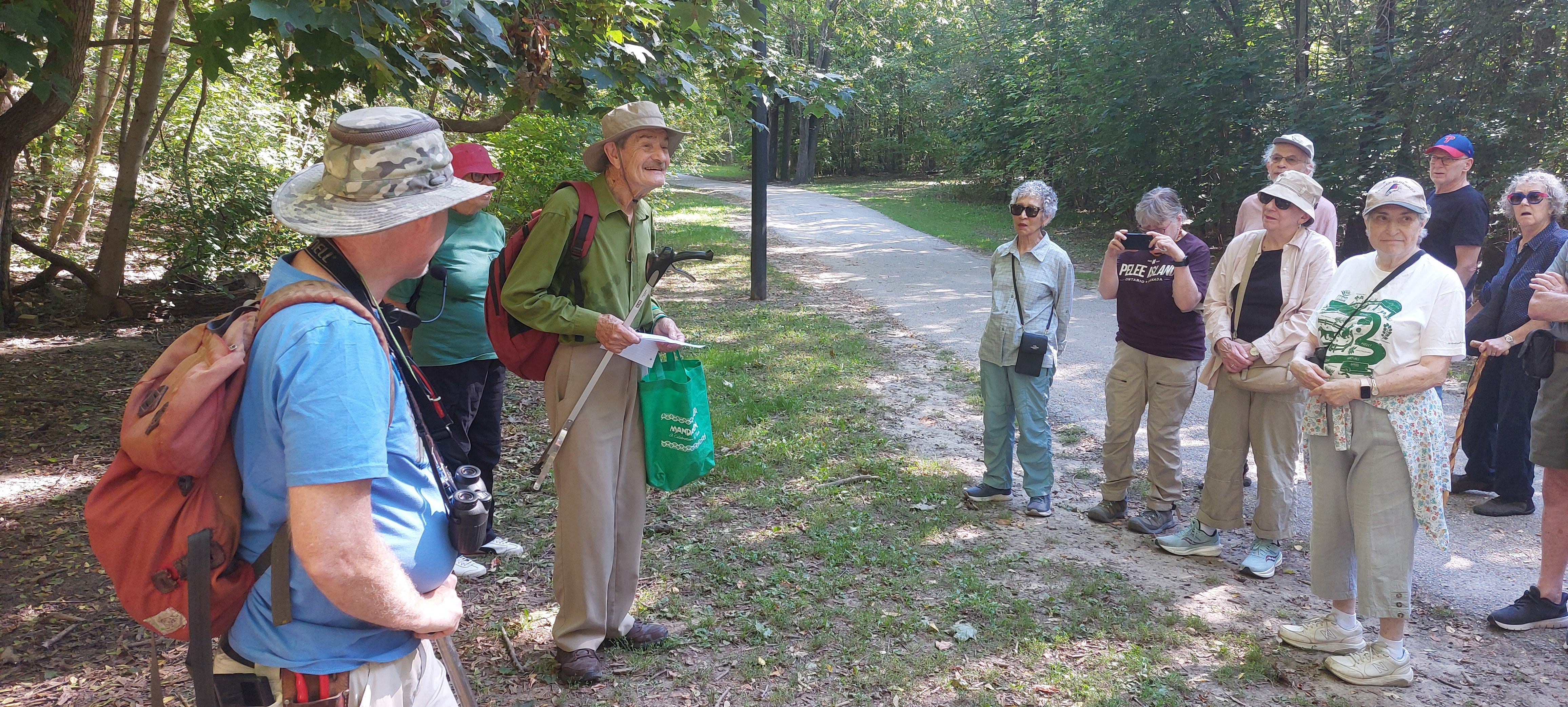
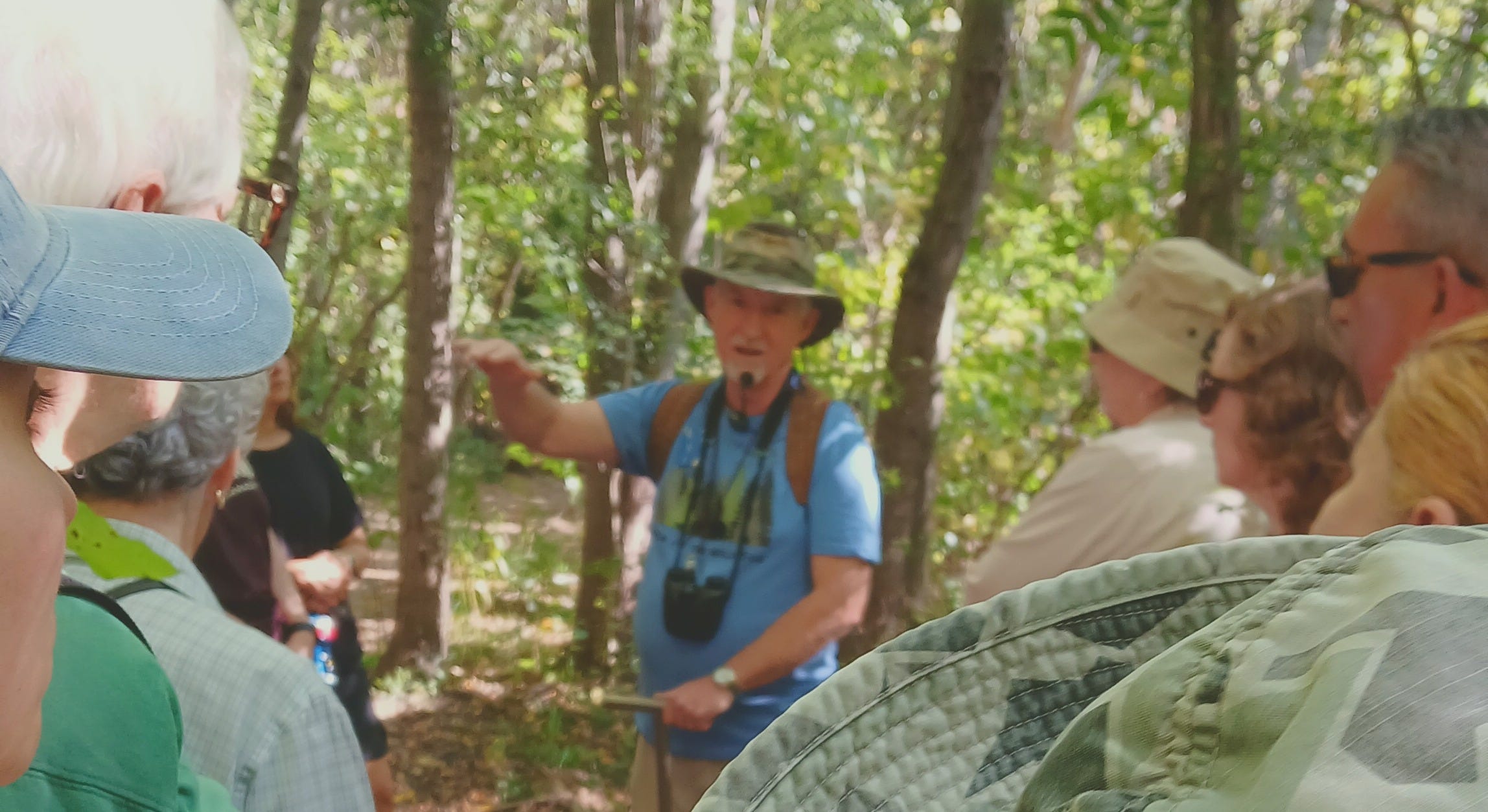
As usual, Steve was incredibly well-informed on a very wide range of topics, making it difficult to report adequately on what he covered in 3 hours. These are merely notes on some of his observations. Here I am introducing him at the start (note Rachel wearing the new t-shirt) (photo by David Raymont):
It is noteworthy that Steve was responsible in April for publishing the latest list of invasive plants in Ontario; there were 193 plants on the list.
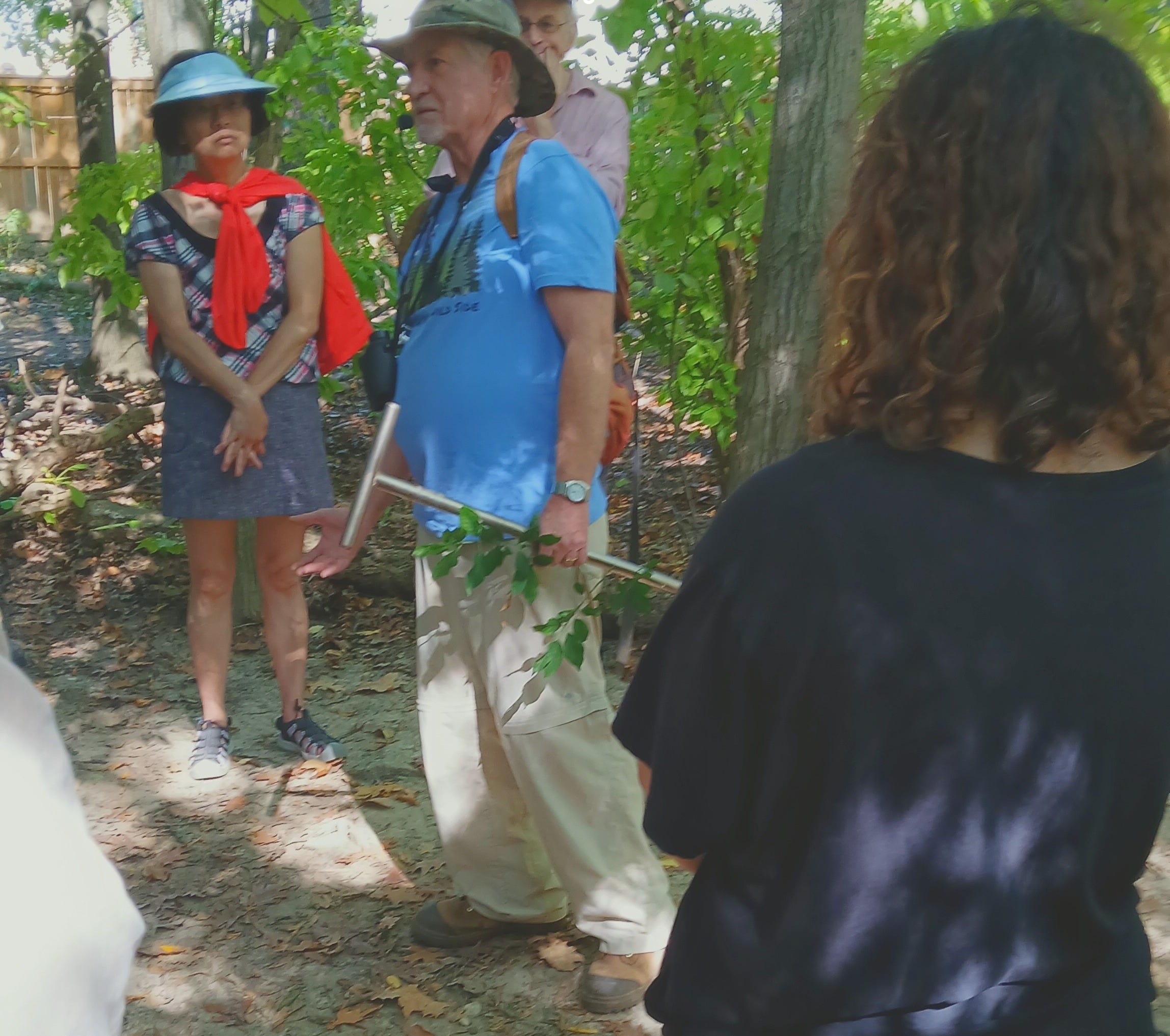
Steve first noted that the soil in the area where we were was likely disturbed and packed down by activities (such as possibly the preparation for the (unbuilt) Spadina Expressway) and therefore required hardy, resistant plants . He noted the stand of Siberian elms near Ava and also a straight line of them very close together running down the slope nearby. These are non-native trees, originating in northern China and eastern Russia. The Dutch elm disease had wiped out most of the large native white elms and the Siberian elm was introduced as a replacement. It grows fast and is a resilient tree. It was also used for hedges and the straight line was probably originally a hedge for a property on Ava. If hedges are not cut, they become a line of close-together trees. Later, Steve made the same comment about European buckthorn. The settlers introduced it as a hedge plant (the thorns prevented animals from going through it); the plants later became large trees and spread to the extent we have them now. Steve is seen here, holding his soil testing instrument (penetrometer):
When we got into the forest on top of the slope near the Strathearn side of the park, Steve surmised that had been plantings here. He noted the large number of silver maples and a mix of other trees typical of what the former Ministry of Natural Resources used to grow in its nurseries. We saw red oaks, with young saplings growing near them, an encouraging sign. Other trees noticed were green ash, white spruce, white pine, Norway, Manitoba and sugar maple, black cherry, black walnut, black locust, European linden, white elm, aspen, hawthorn. Bushes included alternate-leaved dogwood, sumac and others. The white pines were not doing so well, as they were competing for sunlight.
We saw several dead ash trees. Steve said a large proportion of the ash trees were killed by the emerald ash borer. However, he pointed out that, even when dying, the tree can produce seeds, which can then get planted and produce new trees.
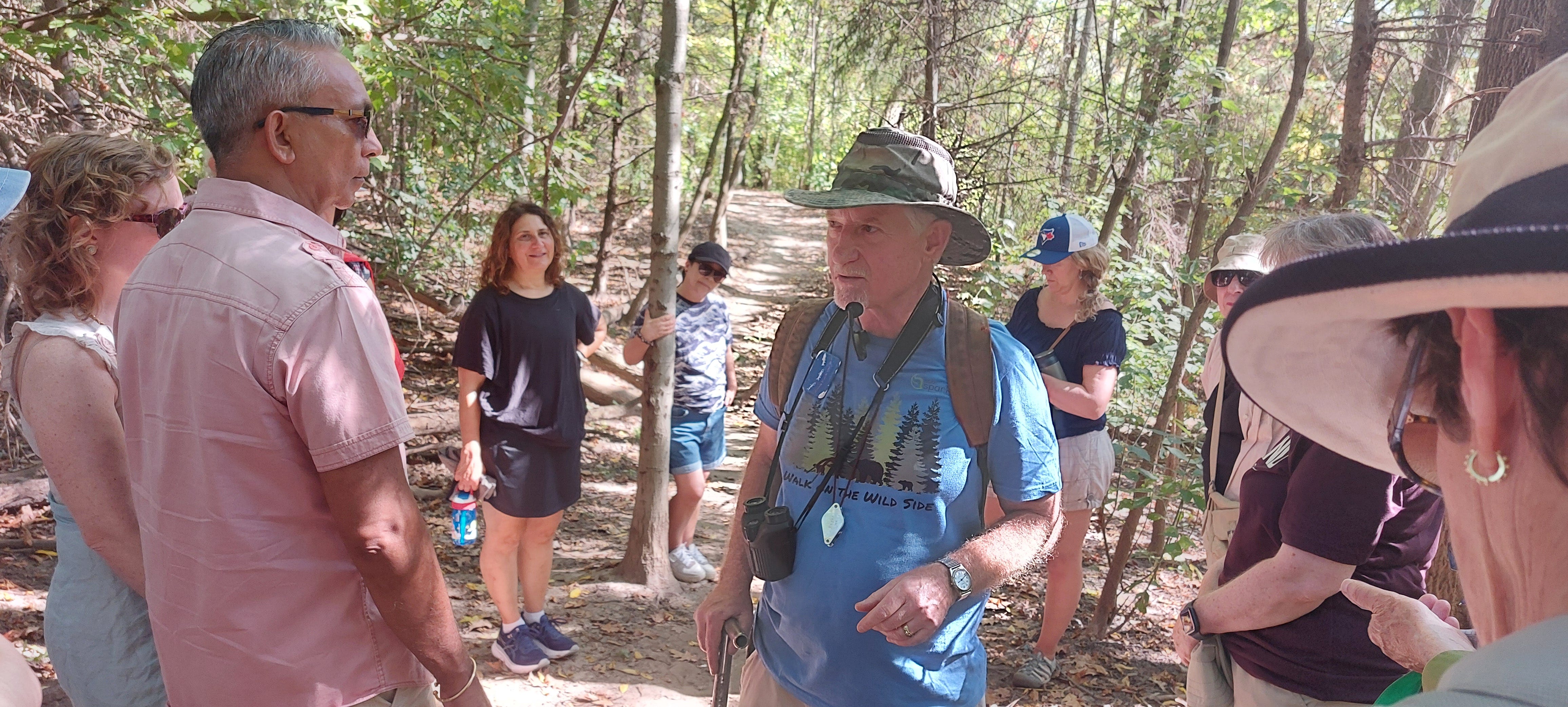
We saw some black walnut trees and Steve observed that their roots produce a poisonous allelopathic aromatic compound called juglone which prevents competing plants from growing around it.
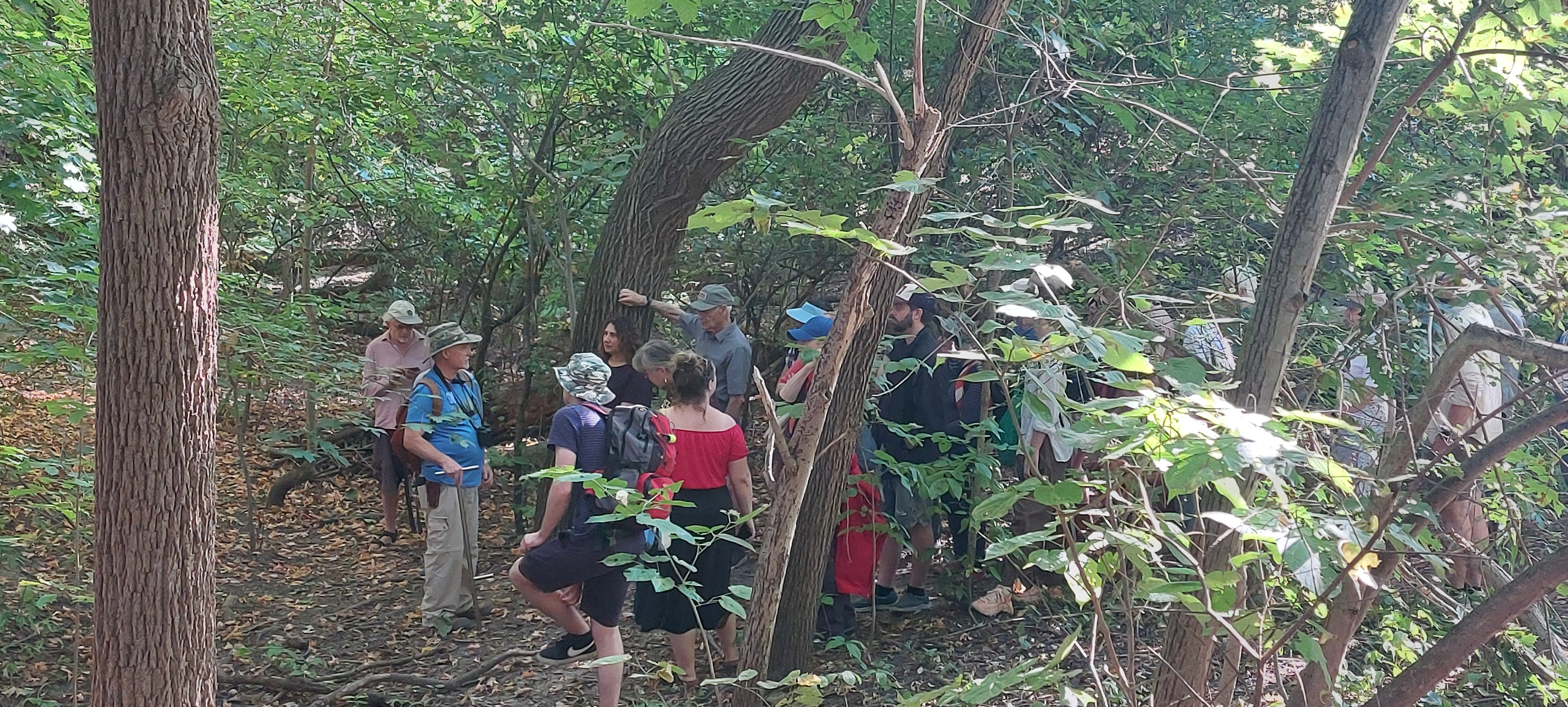
Along the gully that runs next to the playing field and parallel with Strathearn, we found several large, mature red oaks and at least one white oak. Steve estimated they might date from the 1870s. He agreed that this gully could be the original course of the Cedarvale Stream, which joined Castle Frank Brook somewhere east of the dog park. But he said the side beside the playing field was too straight and regular to be a natural bank.
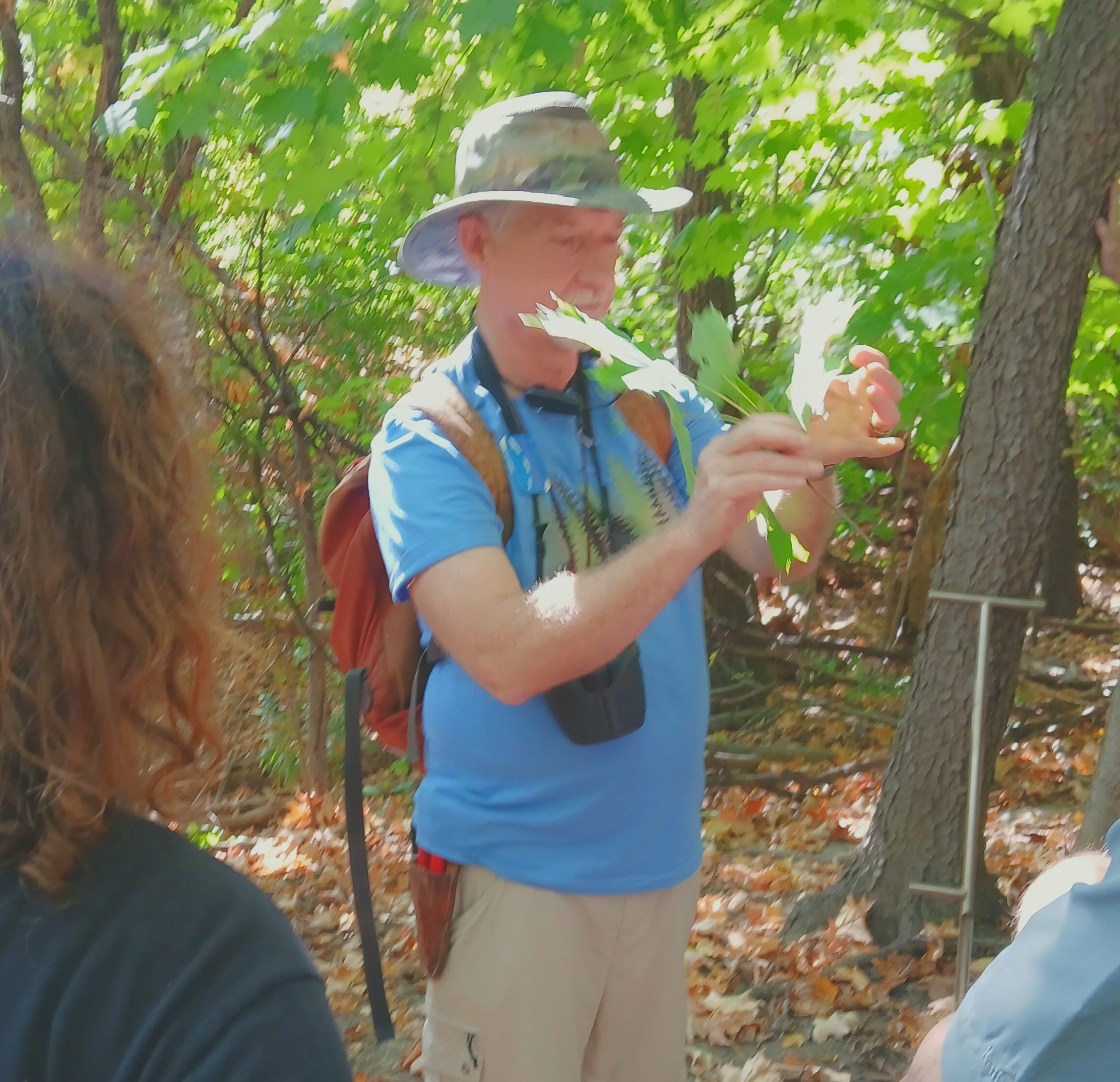
At different points in the walk, Steve pointed out several ways of distinguishing Norway from sugar maple trees. The first was the brown spots that are on many of the Norway maple leaves; later Steve showed us the two leaves and noted that the Norway has 7 points and the sugar 5; finally, when the Norway leaf is detached, a white sap oozes out. Here he is with the two leaves:
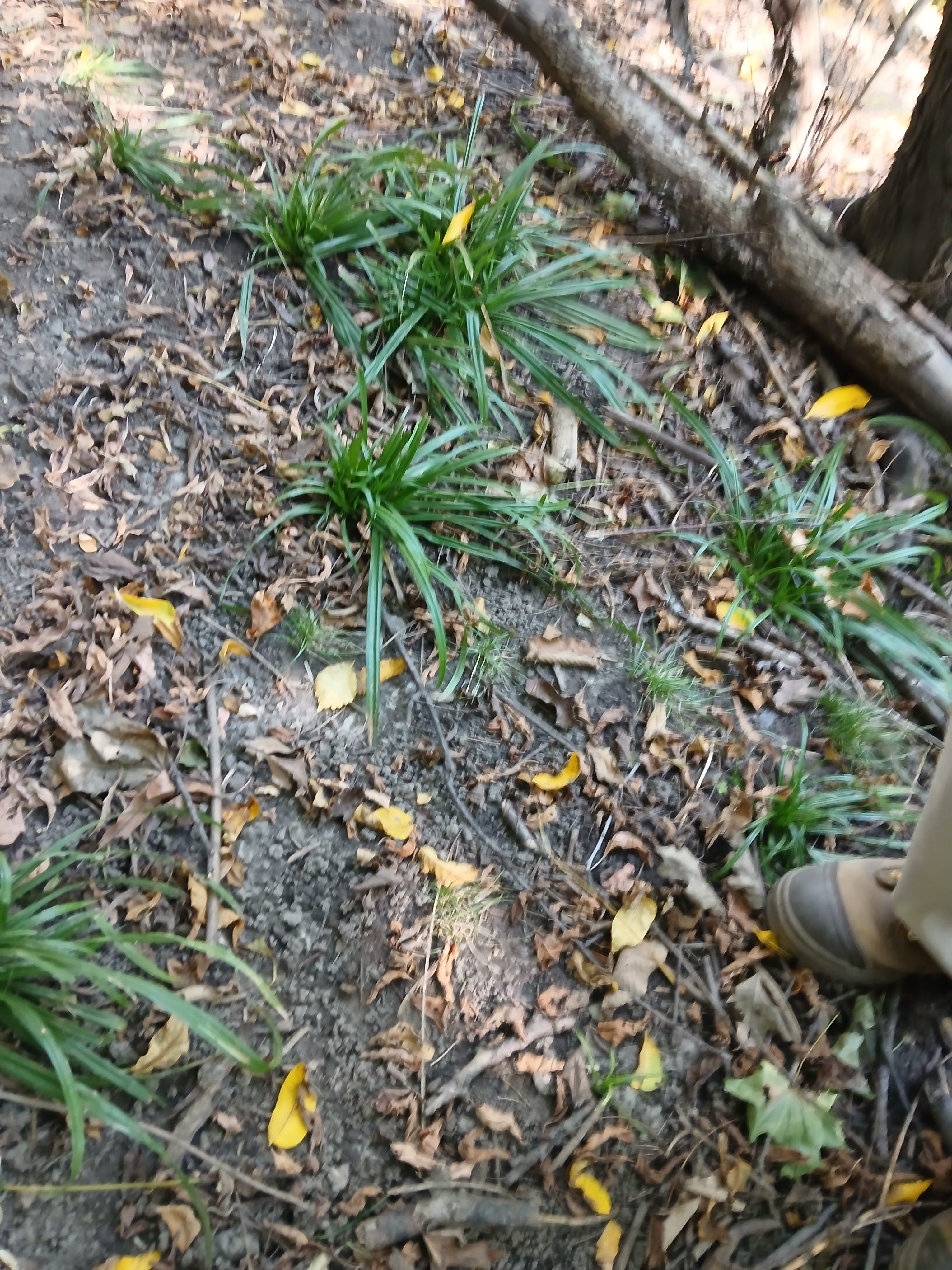
One plant observed was a sedge, probably woodland sedge. Steve told us there are 300+ types of sedge in Ontario, mostly native:
When we got to the large planting on the slope down from Strathearn that was put in earlier in the year by volunteers organized by the City and Friends of Cedarvale, we observed that the trees and bushes were surviving quite well. Steve observed that the mix of trees and plants selected by the City would not occur naturally. He predicted that the trees, including aspen and bur oak, would eventually predominate, this was where we turned around.
Steve noted burdocks on the south side of the slope and said that this plant has been added to the list of invasive species, because of the fact that small birds get entangled in the burs and die.
Many thanks to Steve for taking time out of his busy schedule to come out to Cedarvale and educate us about the flora of the park.
Upcoming events
On Friday 24th October, our Toronto Nature Stewards lead stewards will be leading a group of Upper Canada College students in removing small buckthorn trees, using extractigators.
On Sunday 2nd November, Friends of Cedarvale will have a table at the annual EcoFair Toronto at the Wychwood Barns from 11am to 4 pm, sponsored by Green Neighbours Network and Transition Toronto.
We hope to see some of you there!
John Cummings
Amazing post, John! So informative. Sad I couldn't make it — hope we can get Steve again maybe in the Winter or Spring next year.