

On Saturday 22nd February, two City staff members led a group of us on an informative tour of the park, starting at 2 pm. They were Mark Sherman and Lan Tran, both part of Natural Environment and Community Programs, which is now within Environment, Climate and Forestry Division. The latter has recently become a separate division within the City administration from the renamed Parks and Recreation (formerly Parks, Forestry and Recreation). Got that? So we cannot call them “Parks” staff any longer.
Here are Mark and Lan at the start of the tour next to the carpark beside the Outdoor Skating Rink (you can see the toboggan run behind them):
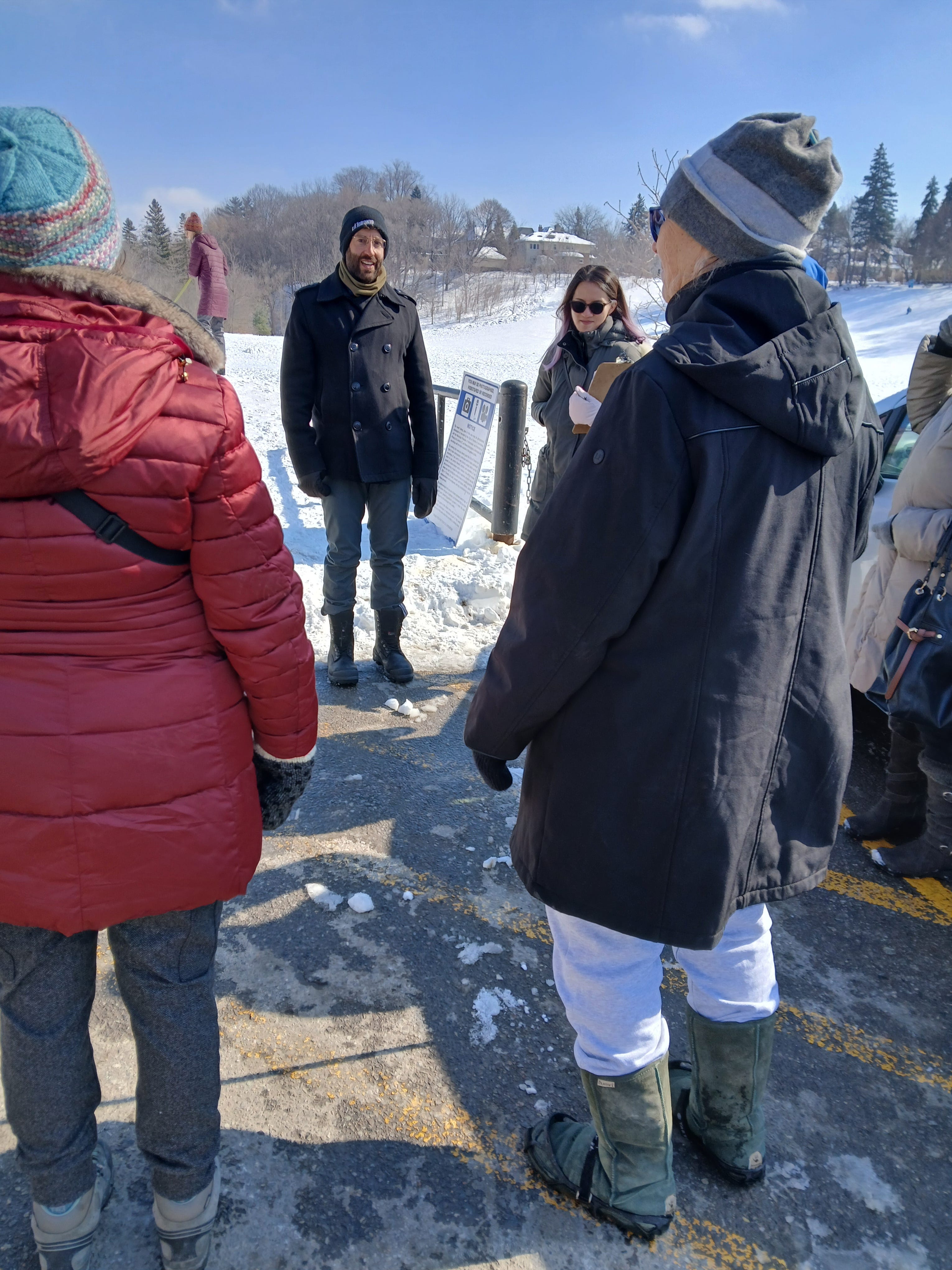
There were 12 of us in the group. Mark and Lan took us south through the ravine section of the park, almost to the Heath St entrance, and back again. They only made a few stops, as the weather was sunny but too cold for standing around for long.The tour lasted an hour and a half.
Mark first asked me to give my spiel about the history of the park. I explained that originally Castle Frank Brook ran through the ravine; this was put into a trunk sewer running under the ravine in the 1950s. Then the Spadina Expressway was almost built, but was cancelled in 1971. In preparation for it, the bottom of the ravine was entirely cleared and not replanted, so that all vegetation here has planted. itself since that date. However, the sides of the ravine were not cleared and many old original trees can still be seen there. In about 1967-68 the subway was built over the sewer and under the ravine.
Here is a short video of Mark and part of the group part-way through the tour:
We passed under the Glen Cedar footbridge and made our first stop not far beyond it:
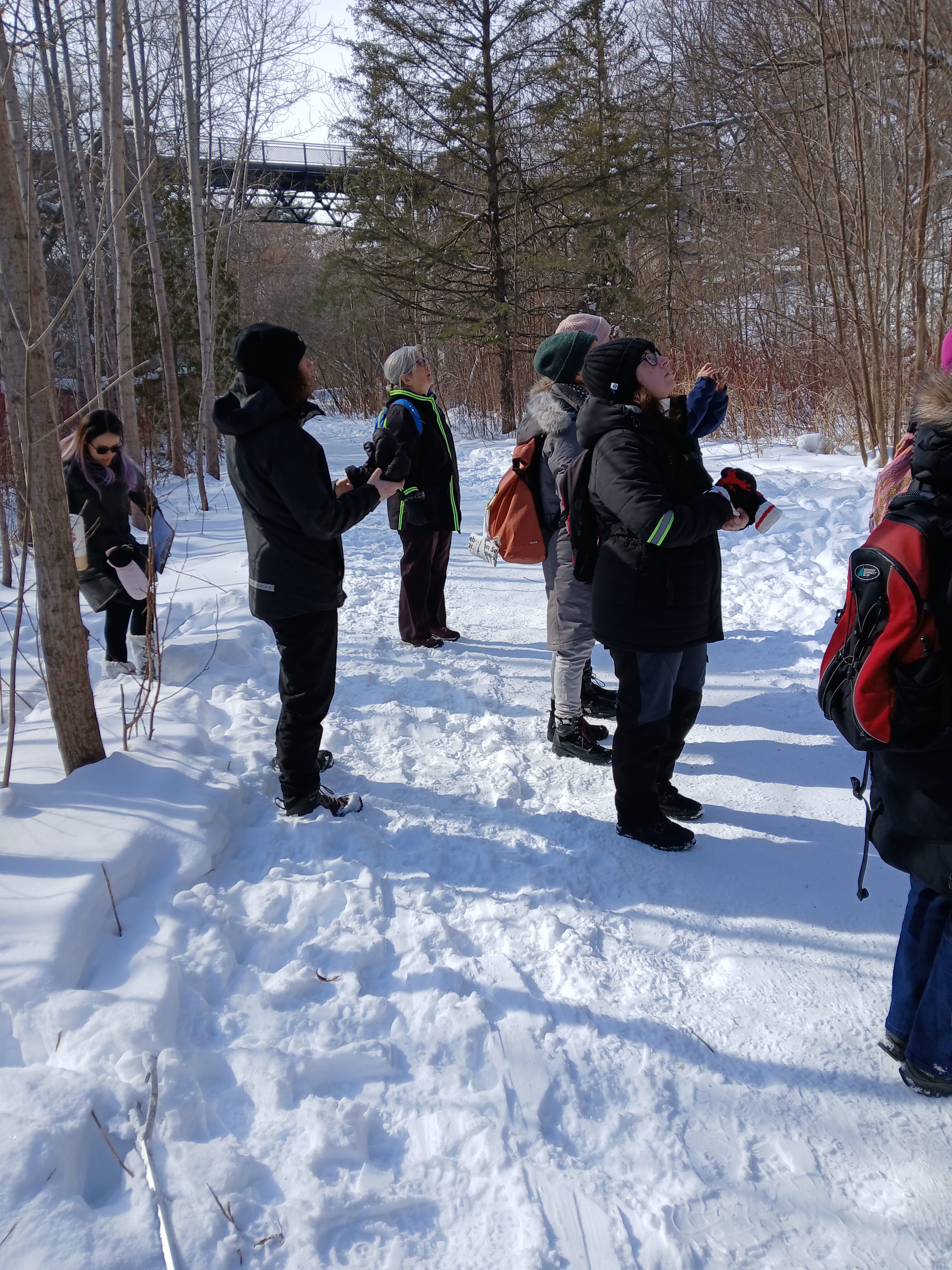
Mark gave an excellent talk on winter tree identification. He noted that, although the trees are bare, there are still some old leaves left from last season, which can be used for identification. More importantly, he pointed out that new buds for the coming spring season are already forming and each type of trees has its own bud. He showed us some of them (later I found “The Ultimate Guide to Winter Tree Identification”). The bark can also be used to identify some trees.
Here are some photos of buds in the park. taken on 7th March (you can see the icy conditions):


The species of trees/bushes identified during the walk included alders, aspens, dogwoods, pines (white) and willows (black and crack).
Mark also talked about the importance of dead wood. It should not be cleared away, but rather left lying. In fact there is apparently a City bylaw that mandates this. Dead wood first provides habitat and food for mammals, birds, insects and fungi; as it decomposes, it recycles nutrients back to the soil including nitrogen, potassium and phosphorus; finally it acts as a carbon sink, slowing climate change. Standing dead trees are called snags.
Mark said that the most alive part of a living tree is the part just inside the bark, whereas with a dead tree, the whole tree is active.
Here is Mark talking on this subject:
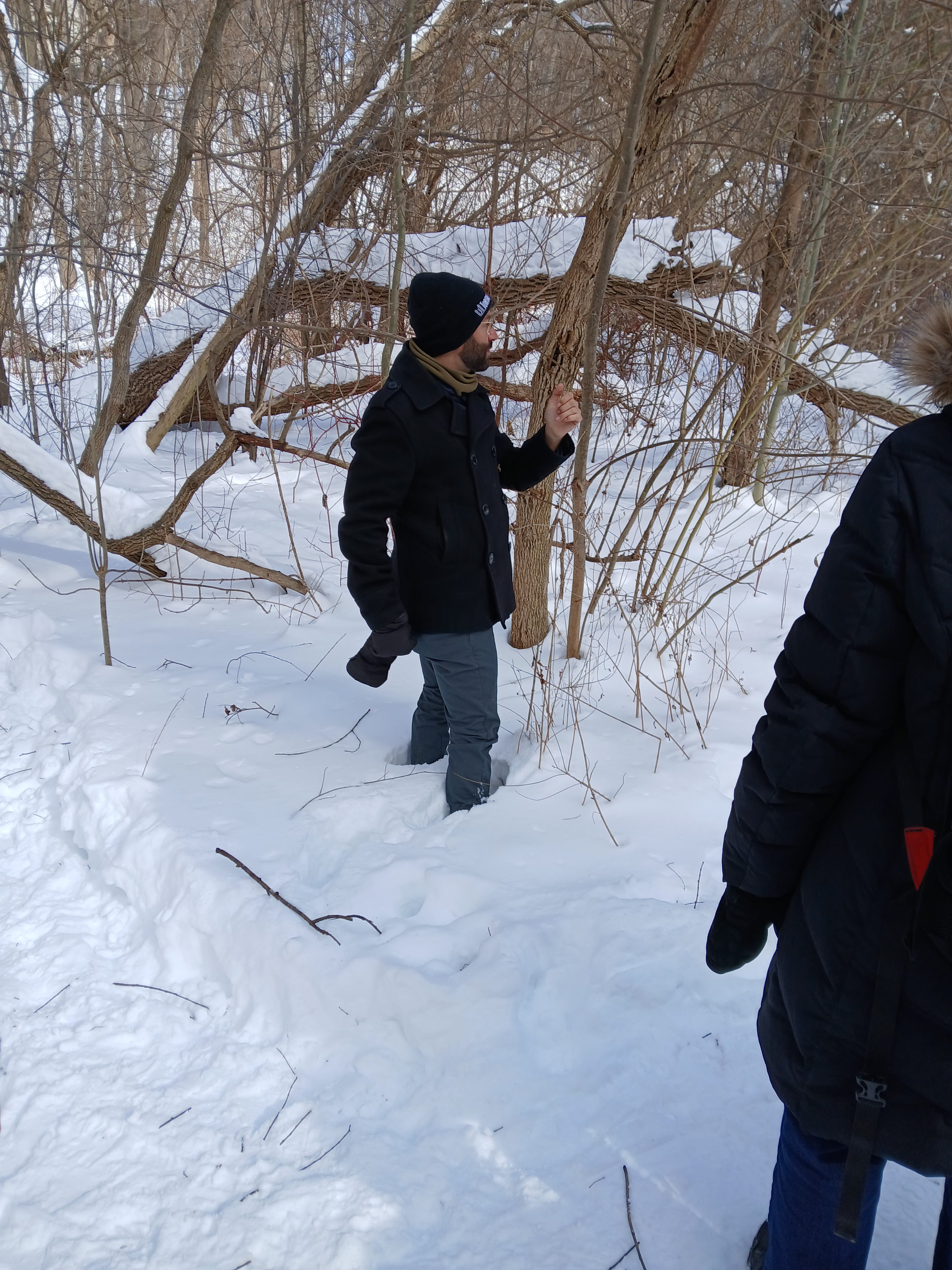
At this point, Mark also pointed out some squirrel dreys and talked about them. The Eastern grey squirrel builds these nests for itself in trees that provide food e.g. oaks, which provide acorns. They use twigs for the outside and line the inside with dry leaves, grass, moss and shredded bark. Mark said squirrels make several dreys and move among them; some 6-8 squirrels share a drey. In the winter, several squirrels will stay in one drey together for warmth. They enter the drey through a hole facing the tree trunk and may also have a second escape hole.
Here are some stock photos of dreys:


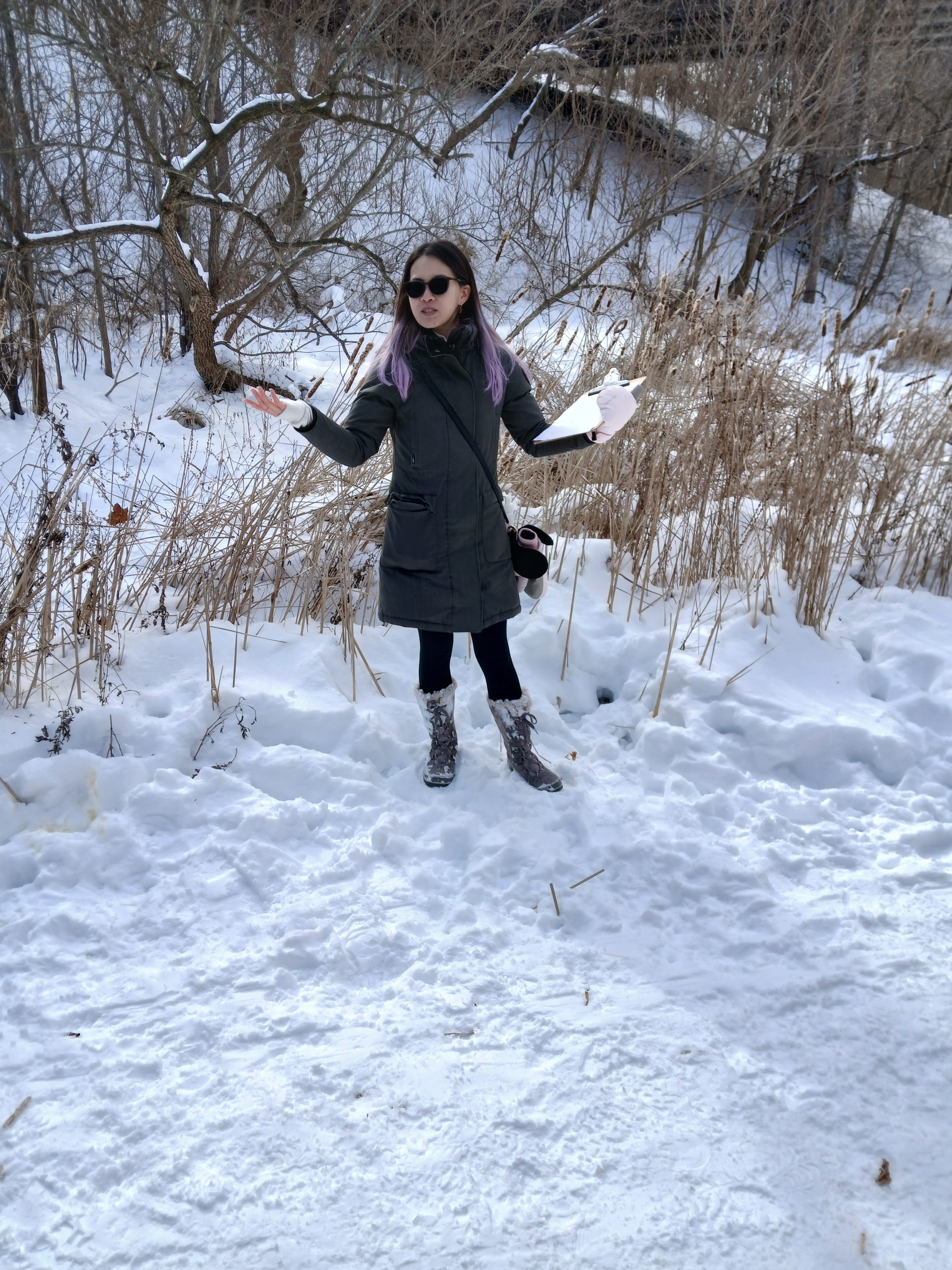
We moved on to the cattail wetland starting at the Bathurst St bridge. This is one of the gems of the ravine. Lan told us that, once the subway was built under the ravine, water started to pool on top of it, providing suitable conditions for a wetland. The cattails (Typha) seeded themselves; there are native, non-native and hybrid species present. The wetland continues to spread in both directions in the ravine. In my post of 30th October 2024, I noted that a New York Times reporter had claimed to have seen a leopard frog in the wetland.
Here is Lan talking about the cattail wetland:
It should be pointed out that the cattail is called a bulrush in Europe. In North America, bulrush refers to a different plant (which we also have in the ravine).
Near the side-path to Suydam Park and Forest Hill, Mark pointed out several large cottonwoods. This tree also likes a wet environment Mark said it is the largest local tree. Here he is again:
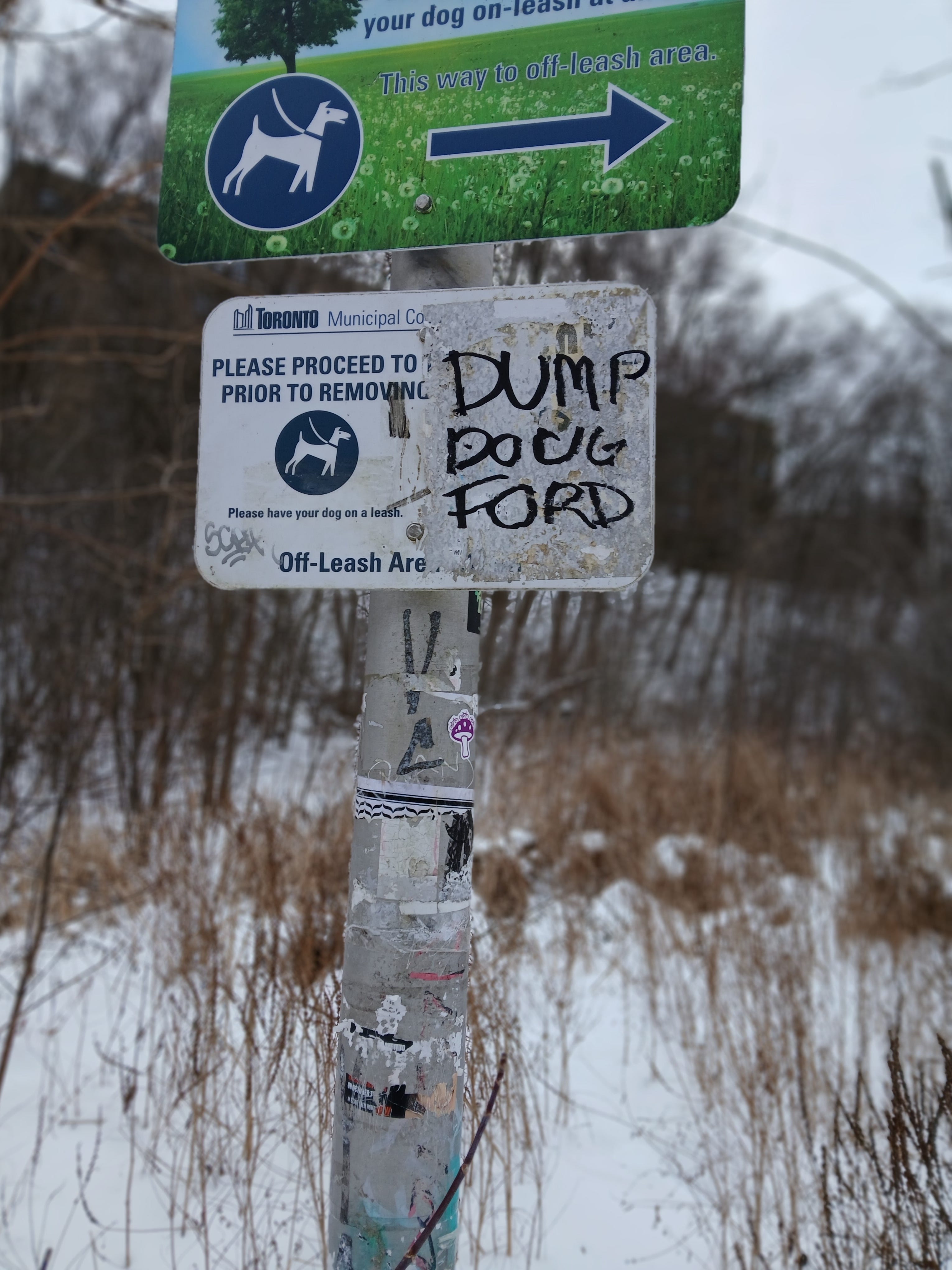
We were reminded that a provincial election was in progress by the graphito on this sign:
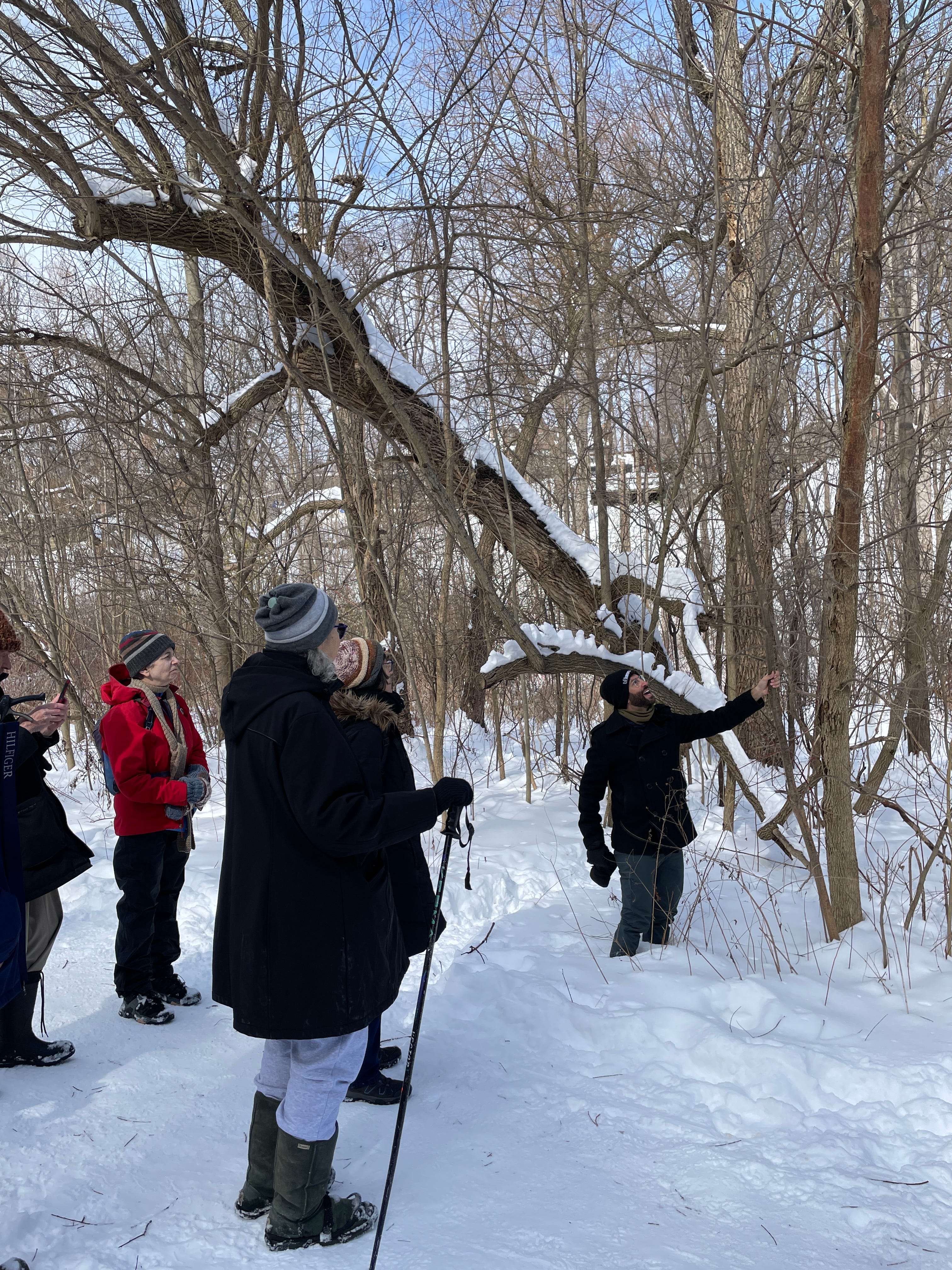
I would like to thank Lan and Mark for taking time out of their weekend to come out and lead us on this interesting tour of the park. At the end they handed out no fewer than 5 pieces of literature, including “A Property Owner’s Guide to Healthy Ravines” and “Toronto Street Tree Guide”.
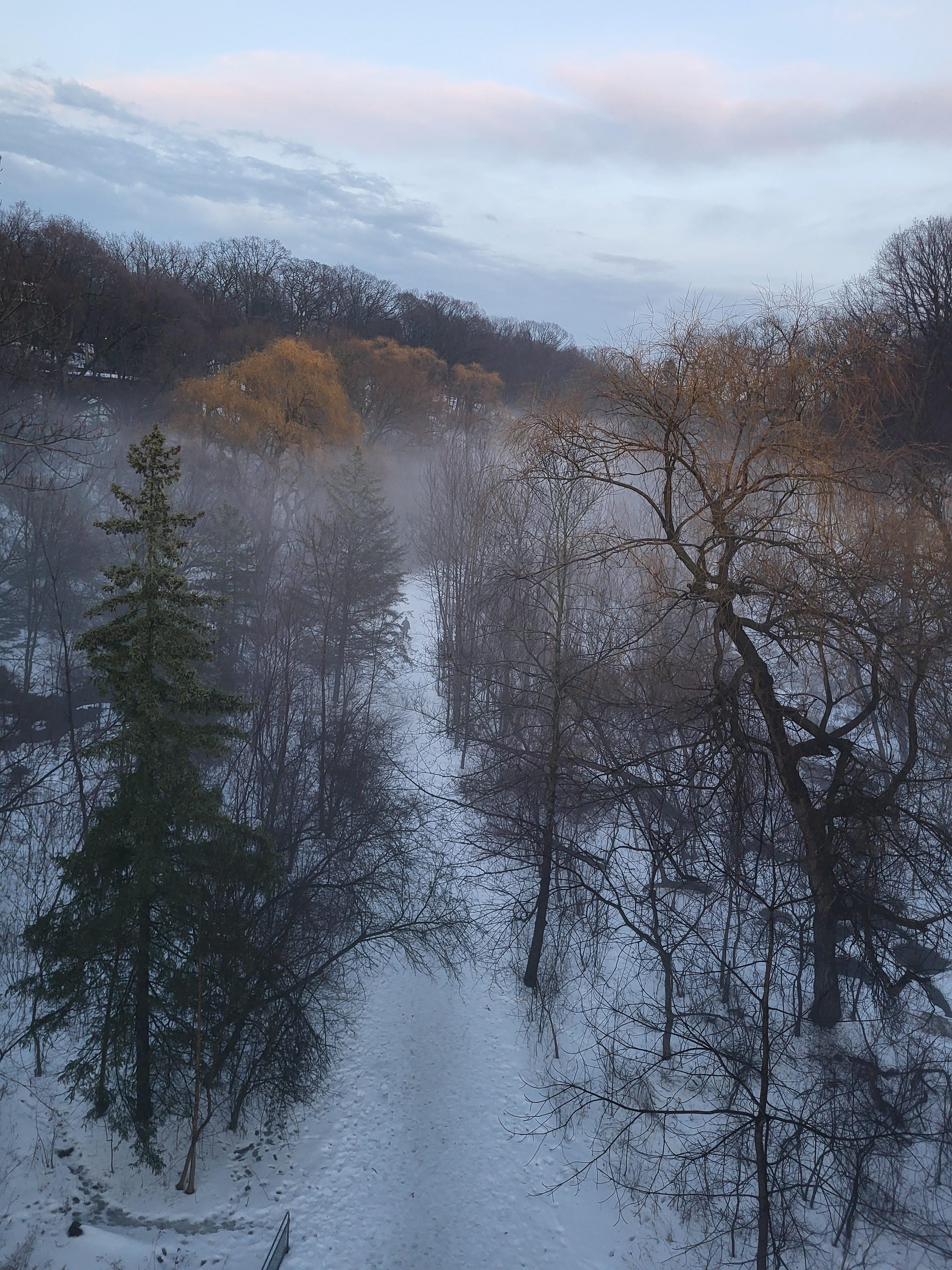
Fog in the ravine
My friend Rona MacDonald, sent me some photos of the fog in the ravine on 5th March. This is looking south from the Glen Cedar footbridge:
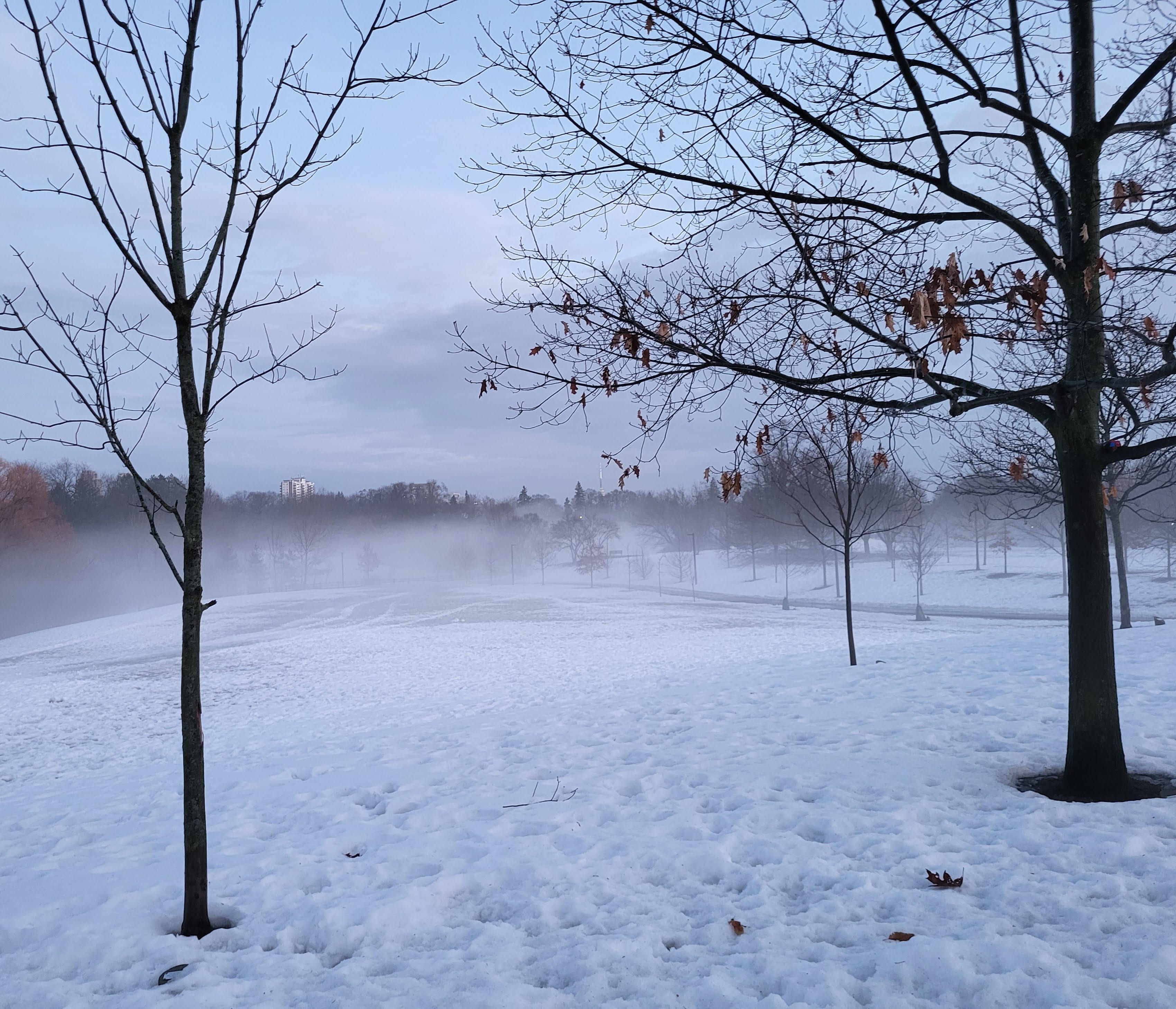
This is the view across the playing field to the dog park. I think the top of the apartment building on the horizon is on Raglan Ave:
Best wishes to all my readers! Hope to meet some of you in the ravine!
John
I love your newsletters! Thanks for keeping up the good work.